
Hair Fall in Women: A Simple Weekly Herbal Hair Oil Routine (That You’ll Actually Follow)
By Bhagyashree Bhujbal, founder of SUBHAGYA Organic Skincare. Originally from Shirdi, now based in Navi Mumbai, Bhagyashree has sold Subhagya products for 4–5 years.
Quick answer: For everyday hair fall, follow a simple weekly routine. Oil your scalp once or twice a week with lukewarm herbal oil and massage gently with your fingertips for 5–10 minutes. Leave it on for 1–2 hours, then wash and condition. Handle wet hair gently, eat enough protein, and see a doctor if shedding stays heavy.
Quick answer: a 3-step weekly routine (oil → wash → condition)
Consistency beats intensity. One simple routine followed for three months does more than ten products tried for two weeks. Here’s the plan most of my customers find easy to stick to:
| Day | What to do | Time needed |
|---|---|---|
| Sunday | Herbal oil massage → wash → conditioner | ~2 hours (mostly waiting) |
| Wednesday or Thursday | Herbal oil massage → wash → conditioner | ~2 hours |
| Other days | Optional light leave-in spray on the scalp; loose hairstyle; wide-tooth comb | 2 minutes |
Is your hair fall “normal”? The 50–100 strands rule
Shedding is part of the natural hair cycle. Losing roughly 50 to 100 strands a day is generally considered normal, and wash days often look worse because loosened hairs come out together.
What is not normal is shedding that suddenly gets much heavier and stays that way for weeks, a parting that keeps getting wider, or patches. A good oil routine is excellent care for your hair, but it can’t fix an internal cause. That’s why this guide includes a “see a doctor” checklist below.
Step 1: How to oil your hair the right way
Most of us grew up with champi. Done right, it’s deeply relaxing. Done wrong (too hot, too rough, too long), it can do more harm than good.
- Warm, not hot. Place the oil bottle in a bowl of warm water for a few minutes. Very hot oil can irritate the scalp.
- Section your hair. Part it in 4–6 sections so the oil reaches the scalp, not just the top layer.
- Use your fingertips, never your nails. Massage in slow circles for 5–10 minutes. Rubbing hard breaks hair, so this should feel calming, not like a workout.
- Oil the lengths too. Run whatever is left on your palms down to the ends, where hair is driest.
- Leave it on for 1–2 hours. Dermatologists commonly suggest 30–60 minutes up to a couple of hours. Overnight oiling isn’t necessary, and on an oily or flaky scalp it can make things worse.
- Don’t tie oiled hair tightly. A loose braid or a soft clip is enough.
How often? Once or twice a week suits most hair types. If your scalp gets oily quickly, start with once a week.
Step 2: Wash & condition without making breakage worse
A lot of the “hair fall” we see in the comb is really breakage: strands snapping because they’re dry or handled roughly. Wash day is where most of that happens.
- Shampoo the scalp, not the lengths. Lather at the roots and let the suds run down. Two gentle washes are better than one aggressive scrub to remove oil.
- Condition every time. Apply conditioner from mid-lengths to ends only. Our Hair Conditioner is made for exactly this step and leaves hair soft, smooth and easier to detangle.
- Lukewarm water, and pat dry. Squeeze water out with a soft cotton towel instead of rubbing.
- Detangle with a wide-tooth comb, starting from the ends and working up.
- Go easy on heat. Air-dry when you can, and keep straighteners for special days.
Step 3: Light leave-in support between oil days
On non-oil days, some women like a light, non-greasy spray they can use on the scalp without washing it out. Our steam-distilled Rosemary Water for Hair is a spray like this. Mist it onto the roots, massage gently for a minute, and style as usual. It doesn’t make your hair oily, so it fits easily around oil days. Patch-test it first if your scalp is sensitive.
(Next week: rosemary water vs hair oil, and whether to use both.)
Choosing your herbal oil: which Subhagya oil suits you?
All of these are made for a weekly scalp-massage routine. Pick based on what your hair needs most:
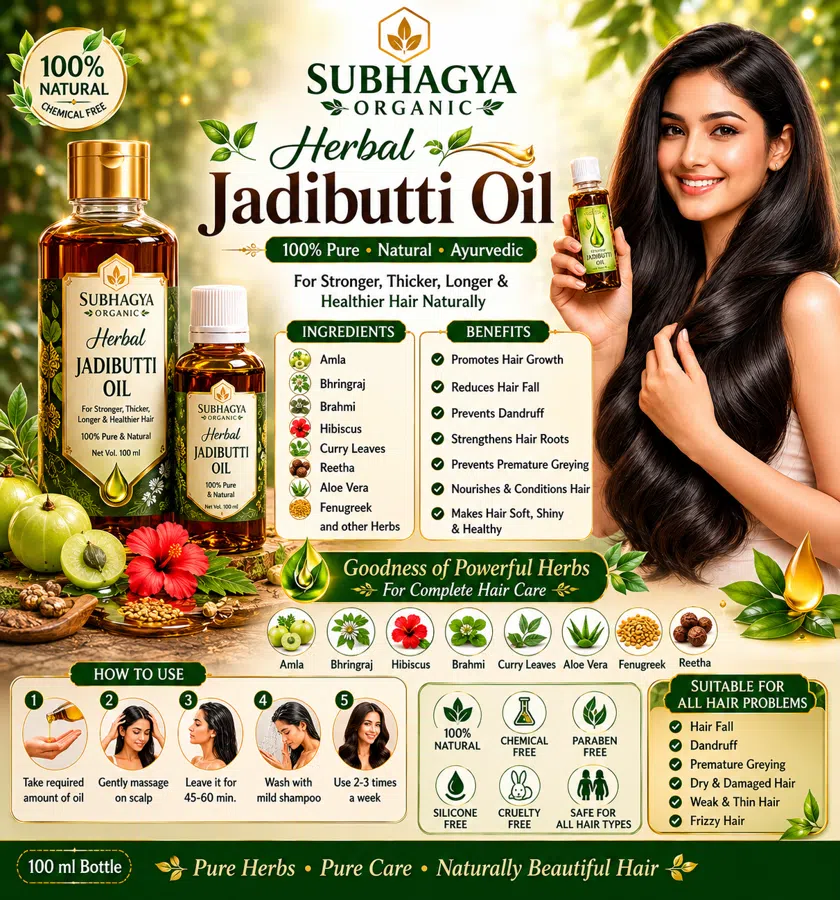
- Herbal Jadibutti Hair Oil: bhringraj, amla, hibiscus and brahmi. A good all-rounder if you want to nourish the scalp, help control hair fall and dandruff, and add shine.
- Black Seed Hair Oil: black seed (kalonji) with cold-pressed oils and herbs. A popular choice if you want stronger-feeling roots and thicker-looking, shiny hair.
- Home Made Herbal Hair Oil: prepared the traditional way with herbs and oils. For anyone who misses the feel of ghar ka tel (home-made oil) and wants a nourishing weekly massage.
- Black Hair Oil: bhringraj, amla, hibiscus, brahmi, curry leaves and black seed. Choose this if you also care about keeping your hair naturally dark-looking.
Want everything in one go? The Hair Fall Control Kit puts together a herbal hair oil, shampoo, serum and herbal hair powder as one complete routine, so you don’t have to match products yourself.
Food, sleep & stress: the inside-out half of the routine
Oil looks after the hair you can see. Your body makes the hair that’s still growing. A few simple habits make a real difference:
- Protein at every meal: dal, curd, paneer, eggs, sprouts, chana, moong chilla.
- Don’t crash-diet. Sudden weight loss is a common trigger for extra shedding a few months later.
- Sleep 7–8 hours, and find one stress outlet you enjoy, such as walking, music or prayer.
- Loose hairstyles. Tight ponytails and buns pull at the hairline day after day.
When to see a doctor
See a doctor (dermatologist) if… – Hair fall is suddenly much heavier and continues for more than 6–8 weeks – Your parting is widening, or you can see patches or bald spots – Your scalp is painful or itchy, or has sores, pus or heavy scaling – Your eyebrows or eyelashes are also thinning – Hair fall comes with irregular periods, acne or facial hair (ask about PCOS) – Hair fall comes with tiredness, weight change, or feeling cold all the time (ask about thyroid, iron/ferritin, vitamin D and B12) – Shedding started after childbirth, illness, surgery or a big diet change and hasn’t settled within a few months
Herbal hair care supports healthy-looking hair, but it doesn’t replace a medical check-up. If you’re prescribed treatment, ask your doctor before continuing your oil routine alongside it.
FAQs
How much hair fall per day is normal?
Losing about 50–100 strands a day is generally considered normal. You may notice more on wash days, because loosened hairs come out together. If shedding suddenly becomes much heavier and stays that way for several weeks, or you see thinning patches, check with a dermatologist.
How many times a week should I oil my hair for hair fall?
Once or twice a week suits most women. Oil the scalp with a lukewarm herbal oil, massage gently for 5–10 minutes, leave it on for 1–2 hours, then wash. If your scalp gets oily or flaky quickly, start with once a week.
How long should I keep oil on my scalp? Is overnight oiling okay?
One to two hours is enough for most people, so overnight oiling isn’t necessary. On an oily, dandruff-prone or sensitive scalp, oil left on too long can build up. If you love overnight oiling and your scalp is happy, use less oil and wash thoroughly in the morning.
Should I oil a dandruff-prone or oily scalp?
Yes, but use less oil, keep it on for 30–60 minutes and wash it out well. Jadibutti Hair Oil is designed to nourish the scalp and help with dandruff. For heavy flaking, redness or itching, see a dermatologist first.
Hot oil or room-temperature oil – which is better?
Lukewarm is best. Warm the bottle in a bowl of warm water so the oil spreads easily. Very hot oil can irritate or even burn the scalp, so test it on your wrist first.
Can hair oil alone stop hair fall?
No oil can promise to stop hair fall on its own. Regular oiling helps by nourishing the scalp, reducing dryness and breakage, and making hair easier to handle. If your hair fall has an internal cause like low iron, thyroid problems or PCOS, you’ll need a doctor’s guidance alongside your hair care.
When should I see a dermatologist for hair fall?
See a dermatologist if heavy shedding lasts more than 6–8 weeks, your parting widens, you notice patches, your scalp is painful or has sores, or hair fall comes with irregular periods, tiredness or weight changes. Early check-ups make it easier to find the cause.
Need help choosing? Ask us on WhatsApp
Not sure which oil suits you? Message us your hair type and concern, and we’ll suggest a simple routine.
💬 Chat with Subhagya on WhatsApp (+91 87795 35622)
Prefilled message: “Hi Subhagya! I read your hair fall oil routine blog. Please suggest the right hair oil / Hair Fall Control Kit for my hair type.”
Follow @subhagya_gloworganically for routines and how-to videos. Glow organically.
Always patch-test a new product on your inner arm 24 hours before using it on your scalp. This article is general hair-care information, not medical advice.